
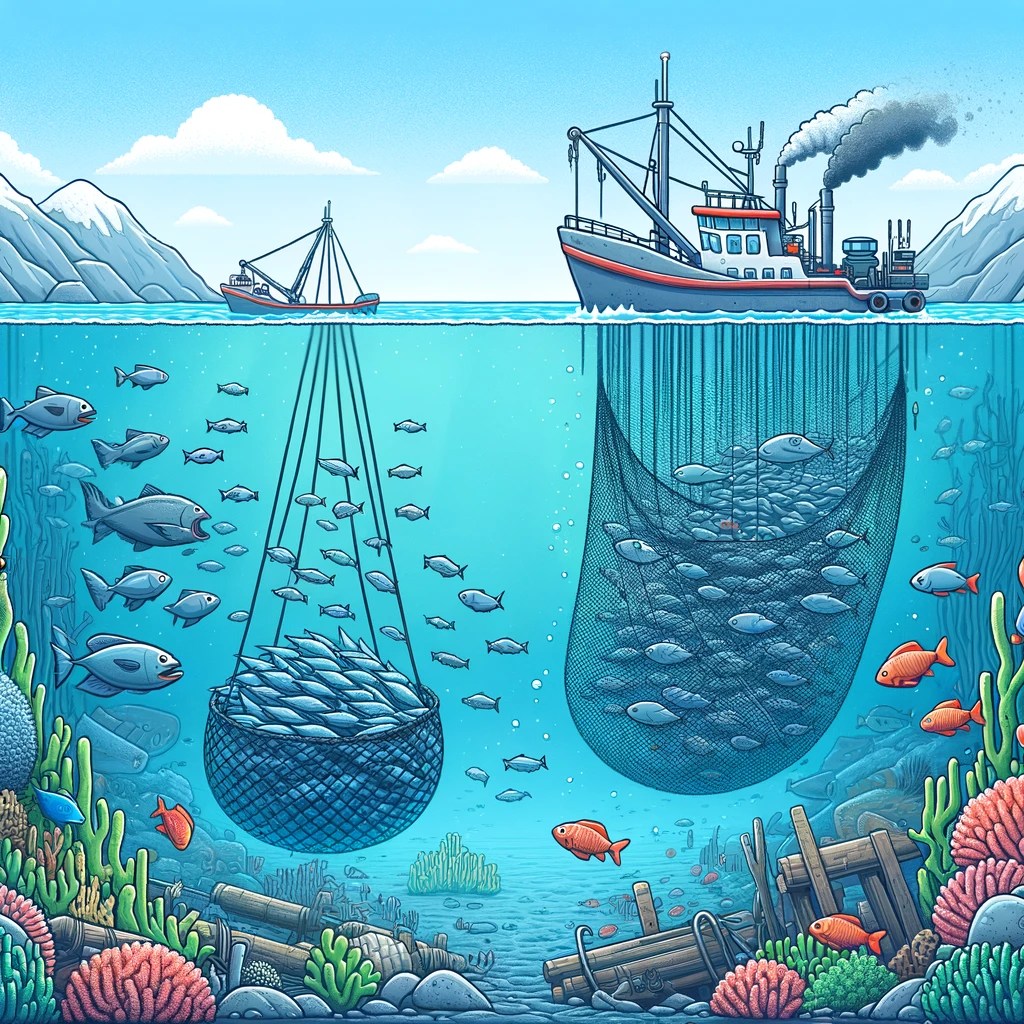
In our quest to harvest the ocean’s bounty, humanity stands at a critical juncture. Overfishing – the practice of catching fish faster than they can reproduce – is not just a threat to fish populations; it’s a threat to the entire marine ecosystem and the communities that rely on it. On the flip side, sustainable seafood practices offer a ray of hope for the oceans and our future.
The impacts of overfishing are far-reaching. It leads to the depletion of key fish stocks, disrupts food chains, and can cause entire ecosystems to collapse. Moreover, overfishing often involves bycatch – the unintended capture of non-target species, further harming biodiversity.
Sustainable seafood, on the other hand, is about balance. It involves fishing methods that minimize environmental impact, support the regeneration of marine populations, and preserve the health of marine ecosystems. Practices like using selective gear to reduce bycatch, adhering to fishing quotas, and supporting marine protected areas are crucial steps towards sustainability.
The choice of seafood we consume has a profound impact. As consumers, we can drive change by choosing seafood that is certified sustainable, asking about the source of our seafood, and supporting policies and initiatives that promote sustainable practices.
Governments, industries, and communities need to work together to enforce regulations, invest in sustainable fishing technologies, and support fishermen in adopting eco-friendly practices. Education and awareness are also key in fostering a culture of responsibility and conservation.
The path to sustainable seafood is not just an environmental choice; it’s a necessity for the well-being of our oceans and future generations. By choosing sustainable seafood, we are not just enjoying the gifts of the ocean; we are actively contributing to its health and abundance.
 Saltwater Stoke
Leave a comment