
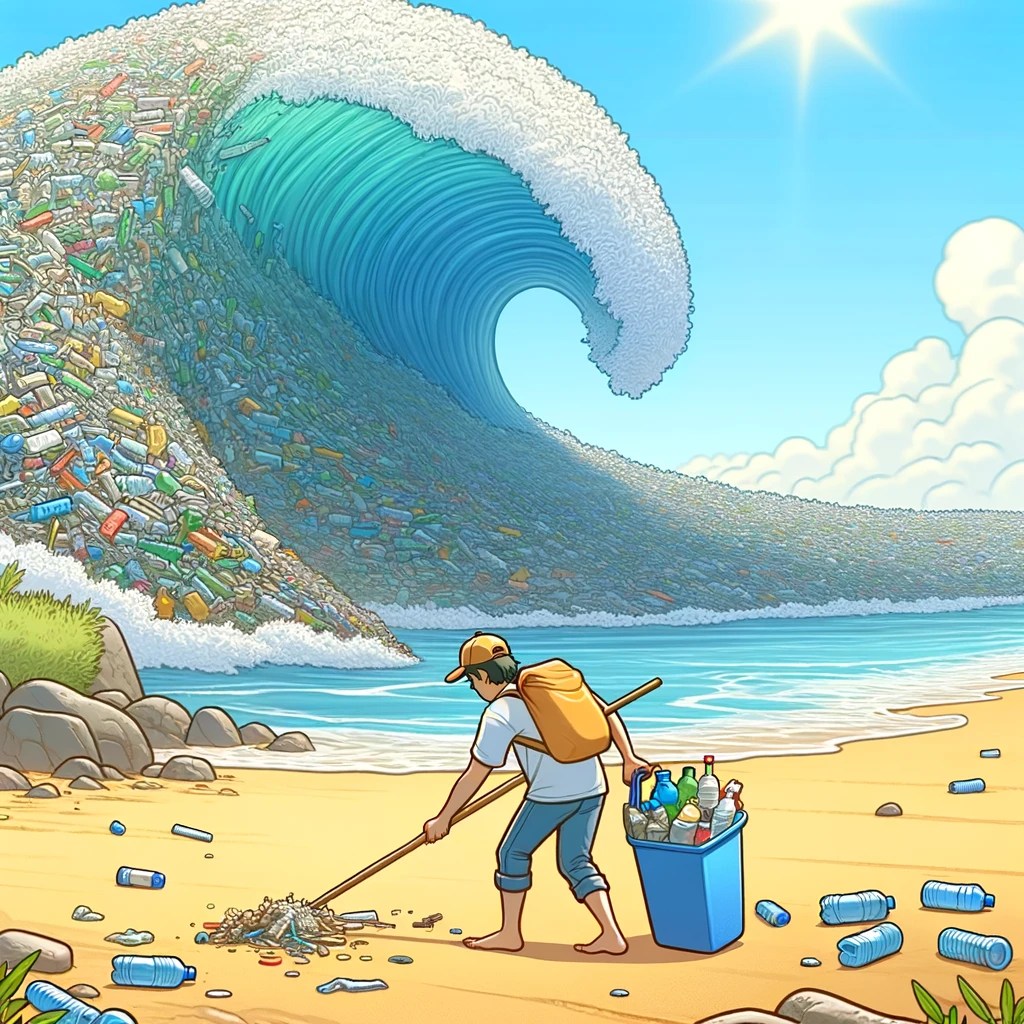
In many developed countries, beach clean-ups have become leisurely community activities, often serving as family-oriented pastimes that blend environmental stewardship with social engagement. While these efforts contribute to cleaner coastlines and heightened environmental awareness, they contrast sharply with the urgent and impactful actions undertaken in nations like Brazil, Kenya and The Gambia, where plastic pollution poses immediate threats to livelihoods and ecosystems. 2024-ISWA-Global-Initiatives-to-Beat-Plastic-Pollution.pdf
In Brazil, informal waste pickers, known as catadores, play a crucial role in recycling efforts, collecting nearly 90% of the country’s recycled material. Despite their significant contributions, these workers often earn below the minimum wage and lack formal recognition and protections. Initiatives like the “Fishing for Litter” project in Guanabara Bay provide stable incomes to fishermen who collect litter, ensuring they earn at least the minimum wage while contributing to environmental cleanup. Such programs highlight the importance of integrating economic benefits for local communities into environmental strategies, ensuring that those at the forefront of waste collection receive fair compensation and improved working conditions. Fishing for litter: the fight to lift wages for plastic waste pickers in Brazil | Reuters
In October 2024, The Gambia unveiled an ambitious National Action Plan aiming to reduce plastic pollution by 86% over the next decade. This comprehensive strategy includes a phased ban on single-use plastics, enhanced waste management systems, and extensive public engagement campaigns. Despite limited resources, The Gambia’s proactive approach serves as a model for other nations grappling with similar challenges. The Gambia launches landmark plan to reduce plastic… | Common Seas
On Kenya’s Lamu Island, the Flipflopi Project transforms plastic waste into functional art, crafting boats and furniture from discarded materials. Founded in 2016, this initiative has achieved significant milestones, including the construction of the world’s first recycled plastic dhow, Flipflopi Ndogo, launched in 2018. By engaging local communities in recycling efforts and raising global awareness about plastic pollution, the Flipflopi Project exemplifies how innovative, community-driven solutions can address environmental issues while promoting economic development. Kenya emerges as leader in fight against plastic pollution
For a visual insight into the Flipflopi Project’s efforts, you can view their work here: The Flipflopi Project: Plastic Waste in Kenya’s Lamu Turned Into Furniture, Boats | Firstpost Africa
While local initiatives make commendable progress, global efforts often falter. Recent UN treaty negotiations in Busan, South Korea, aimed at establishing a legally binding agreement to curb plastic pollution, ended without consensus. Over 100 countries advocated for capping plastic production to address the crisis at its source. However, major oil-producing nations, including Saudi Arabia and Russia, opposed such measures, favoring improved waste management over production limits. This impasse reflects the complex interplay between environmental objectives and economic interests, particularly as the petrochemical sector remains a significant revenue source for these countries. Countries fail to reach agreement in UN plastic talks | Reuters
While local initiatives make commendable progress, global efforts often falter. Recent UN treaty negotiations in Busan, South Korea, aimed at establishing a legally binding agreement to curb plastic pollution, ended without consensus. Over 100 countries advocated for capping plastic production to address the crisis at its source. However, major oil-producing nations, including Saudi Arabia and Russia, opposed such measures, favoring improved waste management over production limits. This impasse reflects the complex interplay between environmental objectives and economic interests, particularly as the petrochemical sector remains a significant revenue source for these countries.
The deadlock is further complicated by projections from organizations like OPEC, which anticipate a substantial increase in oil demand driven by the petrochemical sector, a major producer of plastics. OPEC’s World Oil Outlook forecasts significant growth in oil demand for petrochemicals, especially in Asia, leading to increased naphtha demand. This expected rise underscores the challenges in aligning global economic trends with environmental sustainability goals. OPEC boosts long-term oil demand outlook, driven by developing world growth | Reuters
The juxtaposition of local innovation and global inaction underscores the necessity for cohesive strategies. While grassroots movements like those in The Gambia, Kenya, and Brazil demonstrate the potential for impactful change, their success is contingent upon supportive global policies. Aligning local actions with international agreements and addressing the economic drivers of plastic production are critical to forging a sustainable future. https://www.oecd.org/en/about/news/press-releases/2022/02/plastic-pollution-is-growing-relentlessly-as-waste-management-and-recycling-fall-short.htmstic pollution is growing relentlessly as waste management and recycling fall short, sa ys OECD | OECD
Despite these challenges, the resilience and ingenuity displayed by communities worldwide offer a beacon of hope. Initiatives like The Gambia’s National Action Plan, Kenya’s Flipflopi Project, and Brazil’s support for catadores exemplify the profound impact of local action. These efforts, rooted in community engagement and innovative solutions, demonstrate that meaningful change is possible. By fostering collaboration between local initiatives and global policies, we can create a unified front against plastic pollution, ensuring a healthier planet for future generations.
 Saltwater Stoke
Leave a comment