
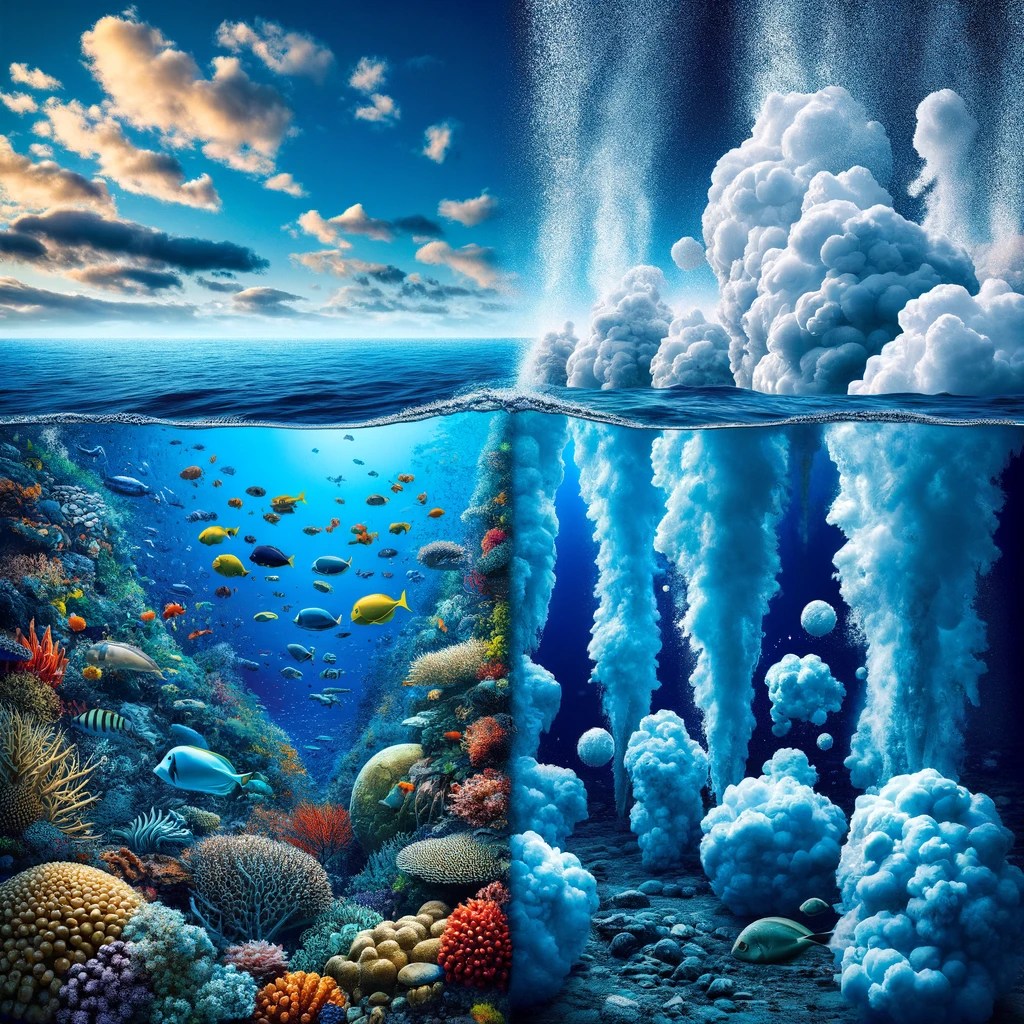
Our oceans hide more than just the mysteries of the deep, they also conceal a climate paradox that’s starting to unfold with potentially dramatic consequences. Beneath the ocean floor, trapped methane hydrates, known as fire-ice, are a ticking time bomb in the context of global warming. This frozen methane, once stable, is now at risk due to the rising temperatures of our oceans, a direct result of human-induced climate change.
A team from Newcastle University has brought to light a concerning discovery: as the planet warms, these methane hydrates begin to thaw, releasing methane into the atmosphere. Methane is a greenhouse gas far more potent than CO2, and its release could accelerate the warming process, a scenario we’ve been desperately trying to avoid.
The research, conducted off the coast of Mauritania, used cutting-edge technology to show that this process is not just a possibility, it’s already happening. Methane previously locked in ice is now moving and escaping through the seafloor, adding to the greenhouse gases in our atmosphere. This revelation challenges our previous understanding and shows how our actions have unintended consequences that feed back into the climate crisis.
This discovery underscores a stark reality: the climate crisis is more complex and interconnected than we often realize. It’s not just about the emissions we directly produce; it’s also about how the Earth responds to those emissions, sometimes in ways that exacerbate the problem.
It’s a wake-up call for all of us. The release of methane from thawing hydrates highlights the ever more urgent need for action on climate change. It’s a reminder that we need to understand and address not only our direct impact on the planet but also these secondary effects that our actions can trigger.
This new understanding doesn’t change our goal but adds urgency and complexity to our mission. It’s about recognizing the full scope of the challenge we face and working together to find solutions that consider all aspects of the climate system.
The oceans, covering 70% of our planet, are central to this challenge. They’re not just victims of climate change but also players in the climate system, capable of influencing the atmosphere in significant ways. Protecting the oceans means protecting the planet, and vice versa.
The story unfolding beneath the waves serves not just as a warning but as a testament to the resilience of our planet and the spirit of humanity, every thread of knowledge and action is intertwined, revealing the powerful interconnectedness of our global ecosystem. The discovery of methane release from the ocean’s depths underscores not just a challenge but a profound opportunity for enlightenment and change. It is a clarion call for us to deepen our understanding through continuous education and relentless research. By committing to these endeavors, we illuminate the path forward, uncovering innovative solutions and strategies to mitigate climate change.
This journey of discovery offers us hope. Hope that through our collective curiosity, dedication, and respect for science, we can confront the complexities of climate change. Hope that by sharing knowledge, sparking conversations, and fostering a culture of learning, we can inspire actions that ripple across communities, nations, and generations.
Our resolve to seek answers, to question and to learn, is where true hope lies. It fuels our quest to protect the oceans, our planet, and ultimately, ourselves. As we navigate this critical moment in history, let us find strength in our interconnectedness, and in the knowledge that each of us plays a vital role in shaping a sustainable and hopeful future. Together, armed with education and bolstered by ongoing research, we can face the challenges ahead, forging a legacy of stewardship and resilience for the world that awaits.
 Saltwater Stoke
Leave a comment