
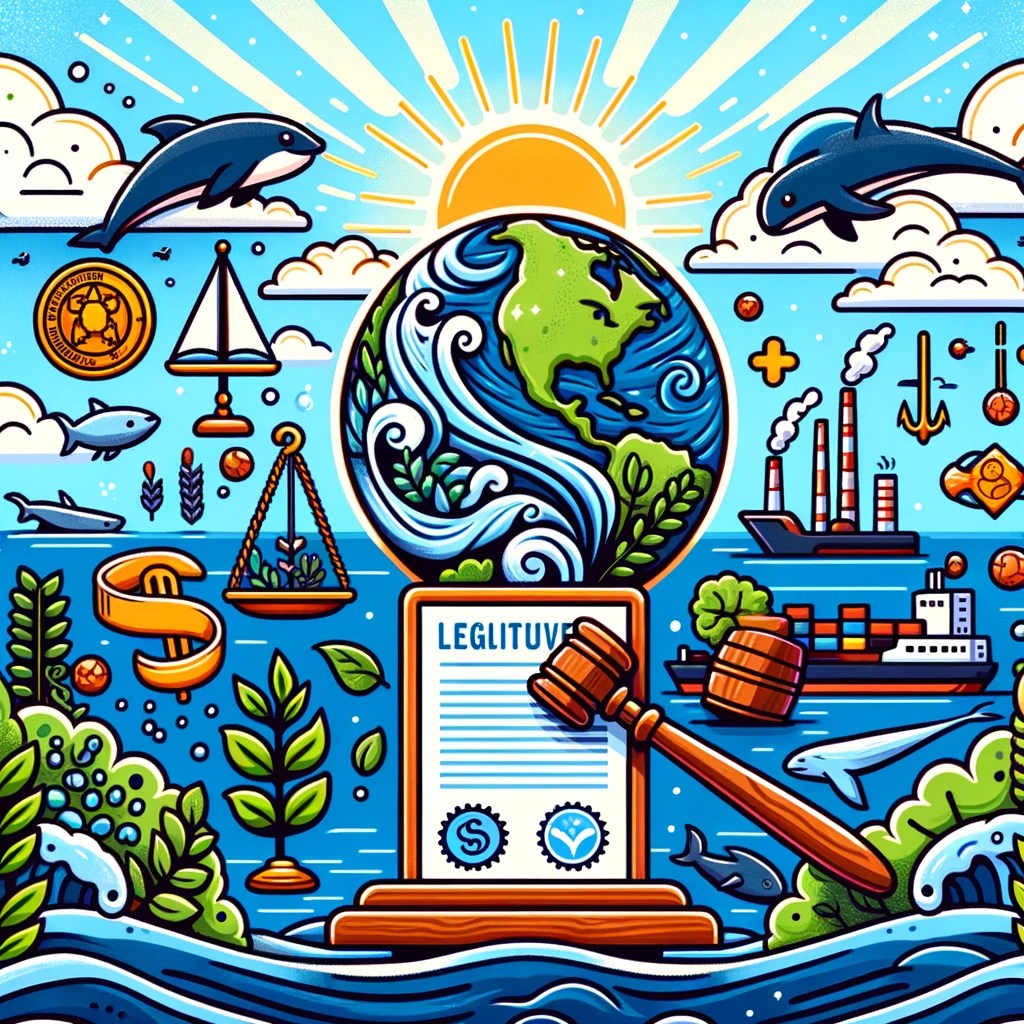
As we close another year, it’s time to reflect on the progress and challenges in our journey towards ocean conservation and sustainability. The year 2023 was marked by unprecedented strides in ocean-saving legislation, a testament to the growing global commitment to protect our oceans. Yet, the journey is far from over.
This year saw remarkable legislative efforts aimed at saving our oceans. From stricter regulations on marine pollution to initiatives promoting sustainable fishing, the world took significant steps forward. However, not all was smooth sailing. Some of the legislation, while well-intentioned, fell short in its language and commitments. The call for phasing down fossil fuels, rather than an outright phase-out, and the somewhat ambiguous targets for transitioning to clean energy by 2050 highlight the need for more decisive action.
Amidst these legislative efforts, a positive trend emerged within the supply chain. Ship owners, port operators, and manufacturers have begun challenging each other to lower their CO2 emissions. This shift towards shared clean energy and CO2 reduction credentials as a business imperative is a promising development. It demonstrates an industry-driven push towards sustainability, setting a precedent for others to follow.
Despite these advancements, consumer demand has not kept pace. Price continues to be the predominant factor in purchase decisions, often overshadowing the environmental impact. This disconnect between supply-side willingness and consumer inertia remains a hurdle. However, there’s a silver lining. As industries continue to innovate and reduce their carbon footprints, we anticipate a ripple effect. These ripples, over time, are expected to turn into waves of change, gradually shifting consumer perceptions and priorities.
Looking ahead to 2024, we remain optimistic. The pace of change is accelerating. We foresee a future where the demand for clean energy, carbon-neutral products, and sustainable services becomes the norm, not the exception. The key to this transformation lies in collective responsibility – recognizing that each one of us, as consumers, plays a vital role in shaping the market.
The journey towards zero and very low emission value chains is gaining momentum. As more of the world demands environmentally responsible options, we will see a significant shift in how we interact with our planet. Our optimism is rooted in the belief that, together, we can turn the tide in favor of a sustainable future, for our oceans and for ourselves.
Happy Holidays.
 Saltwater Stoke
Leave a comment