
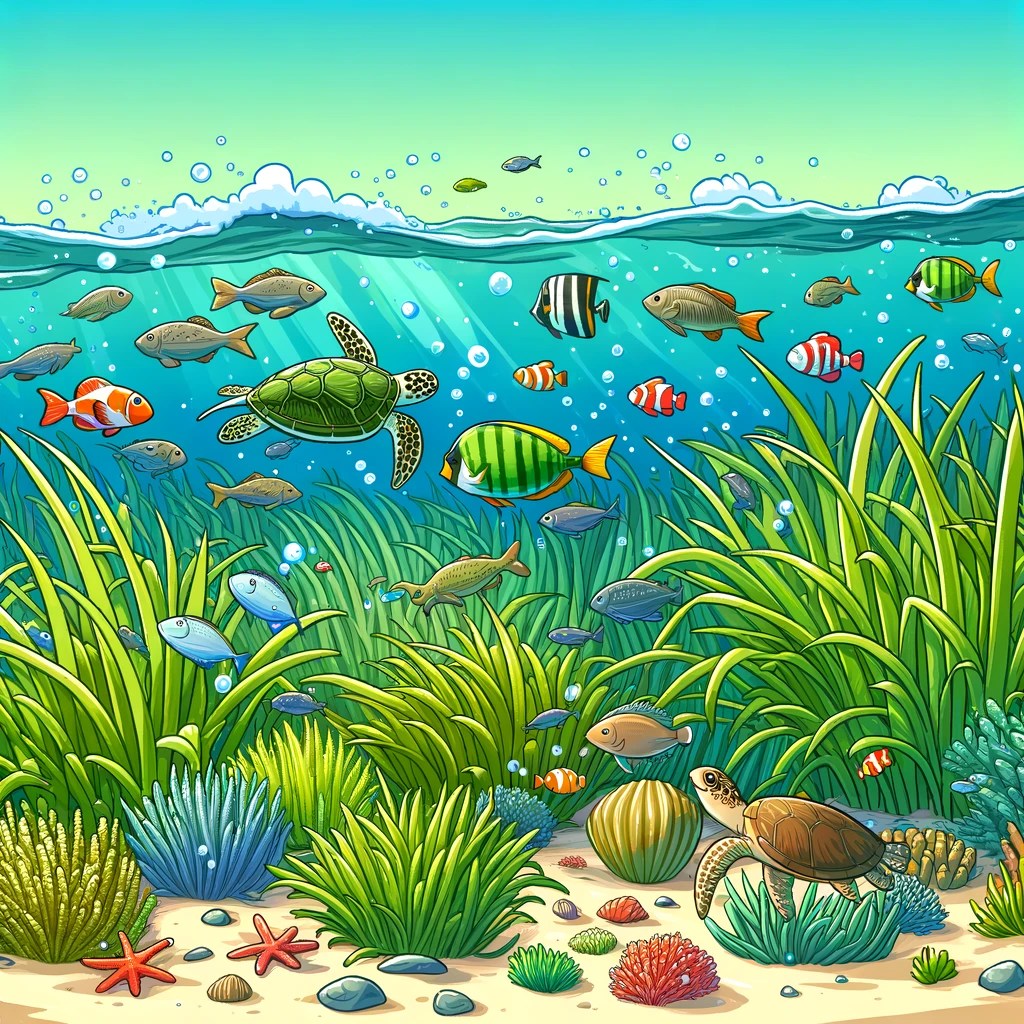
Seagrasses, often unnoticed beneath the ocean’s surface, play a crucial role in maintaining the health and balance of marine ecosystems. These underwater meadows, composed of various species of flowering plants, are biodiversity hotspots and vital to the health of our oceans.
One of the key functions of seagrasses is their role in carbon sequestration. These plants capture carbon dioxide from the water, helping to mitigate the effects of climate change. The carbon stored in seagrass meadows is significant, making their conservation crucial in global efforts to reduce atmospheric carbon levels.
Seagrasses also serve as critical nursery grounds for a wide range of marine life. Juvenile fish, crustaceans, and other marine creatures find shelter and food among the seagrass blades, safe from predators. This makes seagrass beds essential for the health of fisheries and the maintenance of marine biodiversity.
Seagrasses help stabilize the ocean floor and reduce coastal erosion. Their root systems bind the sediment, decreasing the impact of waves and currents on shorelines. This natural barrier protects coastal habitats and human communities from the damaging effects of storms and rising sea levels.
Despite their importance, seagrass meadows are among the most threatened ecosystems on the planet. They are being lost at an alarming rate due to pollution, coastal development, and damaging fishing practices. The loss of these habitats has far-reaching consequences for marine life and the overall health of our oceans.
Protecting and restoring seagrass meadows is vital. Efforts include reducing water pollution, implementing marine protected areas, and engaging in restoration projects. Public awareness and education are also key to their conservation.
The health of our oceans is intricately linked to the well-being of seagrass ecosystems. By safeguarding these underwater prairies, we are not only preserving a vital part of our marine environment but also supporting a healthy and resilient planet.


 Saltwater Stoke
Leave a comment