
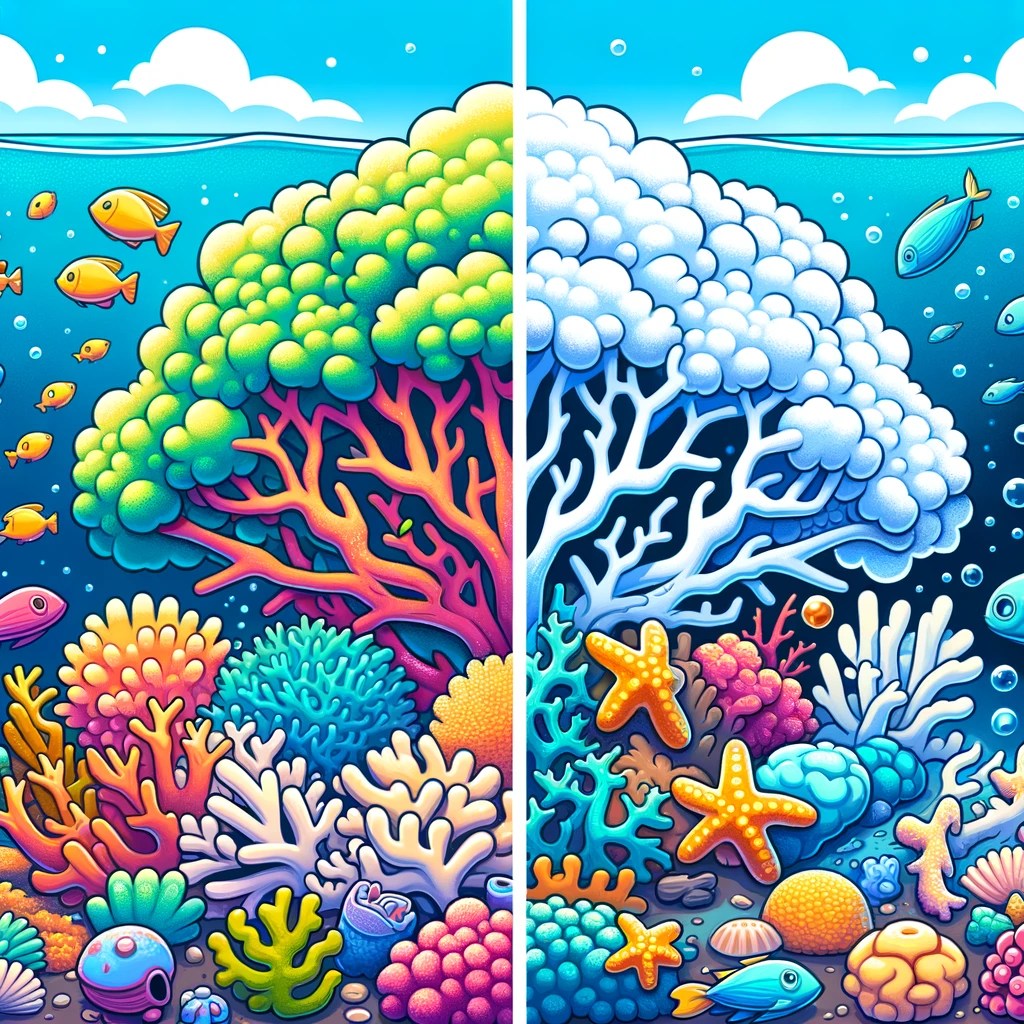
Coral reefs, the vibrant underwater cities of our oceans, face a crisis that threatens their very existence. These biodiversity hotspots are suffering from the devastating effects of bleaching, ocean acidification, and direct human-induced destruction.
Coral Bleaching: A stark indicator of this crisis is coral bleaching. Triggered primarily by rising sea temperatures due to global warming, bleaching occurs when corals, stressed by heat, expel the algae living in their tissues. These algae provide corals with food and their vibrant colors. Without them, corals turn white (bleached) and, if the stress continues, can die.
Ocean Acidification: The increase in CO2 levels is not only warming our planet but also changing the chemistry of our oceans. As seawater absorbs more CO2, it becomes more acidic. This acidification reduces the availability of calcium carbonate minerals, crucial for coral growth and maintenance. The resulting weaker corals are more susceptible to disease and less able to provide habitat for marine life.
Physical Destruction: Beyond these environmental stresses, human activities like overfishing, irresponsible tourism, and coastal development are physically destroying coral habitats. Destructive fishing techniques, pollution, and the physical damage from anchors and dredging directly tear apart the coral structures, leaving them unable to recover.
The consequences of coral reef destruction are far-reaching. Reefs protect coastlines from storm surges, support diverse marine species, and provide livelihoods to millions of people through fishing and tourism. The loss of these ecosystems has cascading effects on marine biodiversity and human communities.
However, there is hope. Efforts in coral restoration, sustainable fishing practices, and reducing greenhouse gas emissions can help mitigate these impacts. Policies aimed at protecting coral reefs, alongside public education and community involvement, are essential for their survival.
As individuals, we can contribute by reducing our carbon footprint, supporting sustainable seafood, and advocating for coral-friendly policies. Each small action adds up, and together, we can turn the tide for our coral reefs.
The plight of coral reefs is a call to action – a reminder of the interconnectedness of our global ecosystem and our role in its stewardship. By addressing the challenges of bleaching, acidification, and destruction, we can work towards a future where coral reefs continue to thrive.
 Saltwater Stoke
Leave a comment