
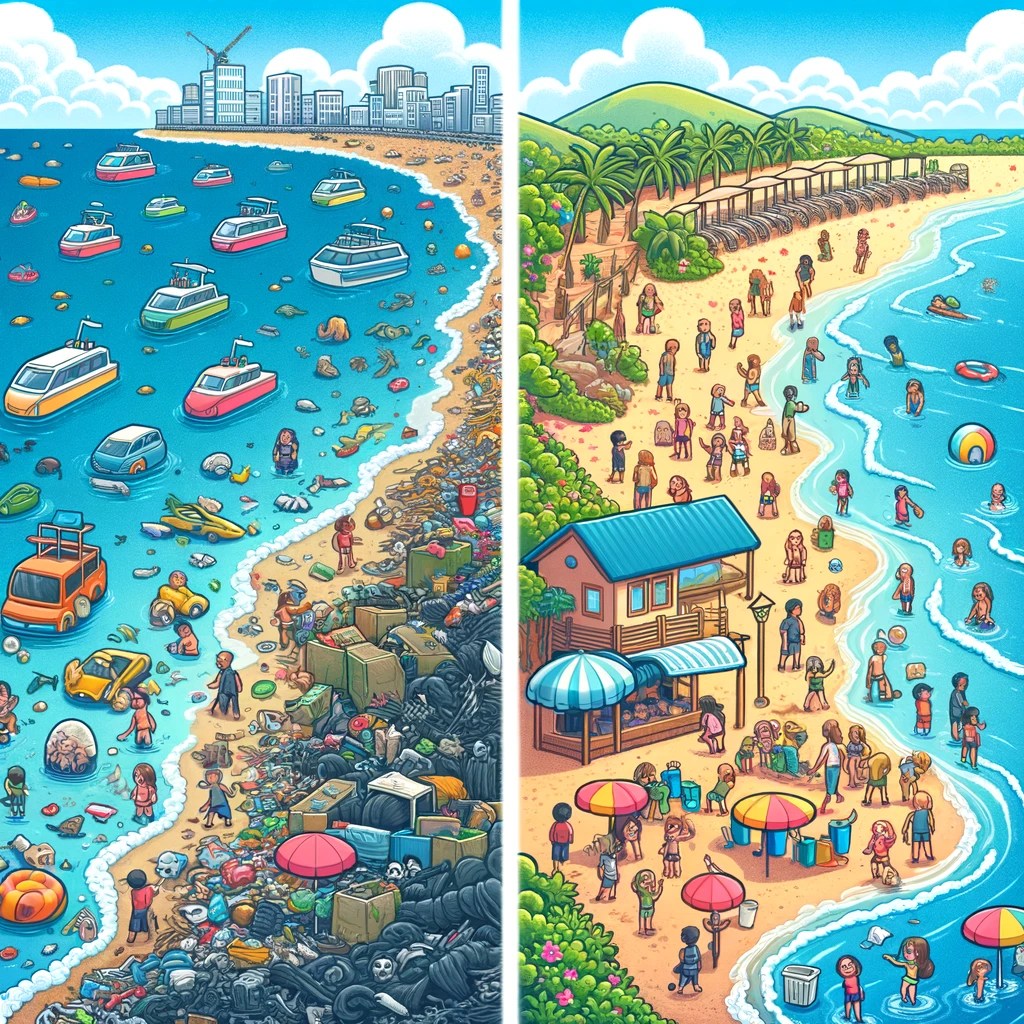
Coastal areas, with their picturesque landscapes and rich biodiversity, have long been favorite destinations for tourists. However, the increasing footprint of tourism on these fragile ecosystems has become a double-edged sword. While tourism can bring economic benefits, it often comes with environmental costs that threaten the very beauty and health of these coastal regions.
Irresponsible tourism practices lead to overdevelopment, where natural habitats are replaced by hotels, restaurants, and other facilities. The increased foot traffic, litter, and pollution strain local ecosystems, leading to habitat destruction, water pollution, and harm to marine life. Activities like irresponsible boating and fishing further disrupt the delicate balance of these environments.
On the flip side, sustainable tourism practices offer a path to preserve these natural paradises while still enjoying their splendor. This approach involves managing tourist numbers, promoting eco-friendly accommodations, and ensuring that activities are conducted in a way that minimizes environmental impact.
Sustainable tourism also includes educating visitors about the local ecosystem and their role in its preservation. By engaging tourists in conservation efforts, such as beach clean-ups and wildlife protection programs, we can turn them from passive observers into active protectors of the environment.
The key is finding a balance where tourism contributes to the local economy without compromising the health and integrity of coastal ecosystems. Governments, businesses, and tourists alike must collaborate to create and adhere to sustainable practices.
As travelers, we have the power to make a difference by choosing destinations and operators that prioritize sustainability, respecting local guidelines, and leaving minimal environmental footprints. Our choices can either contribute to the degradation or the conservation of these precious ecosystems.
The impact of tourism on coastal ecosystems is profound. By embracing sustainable practices, we can ensure that these natural treasures are preserved for future generations, maintaining their status as places of beauty, relaxation, and inspiration.
 Saltwater Stoke
Leave a comment