
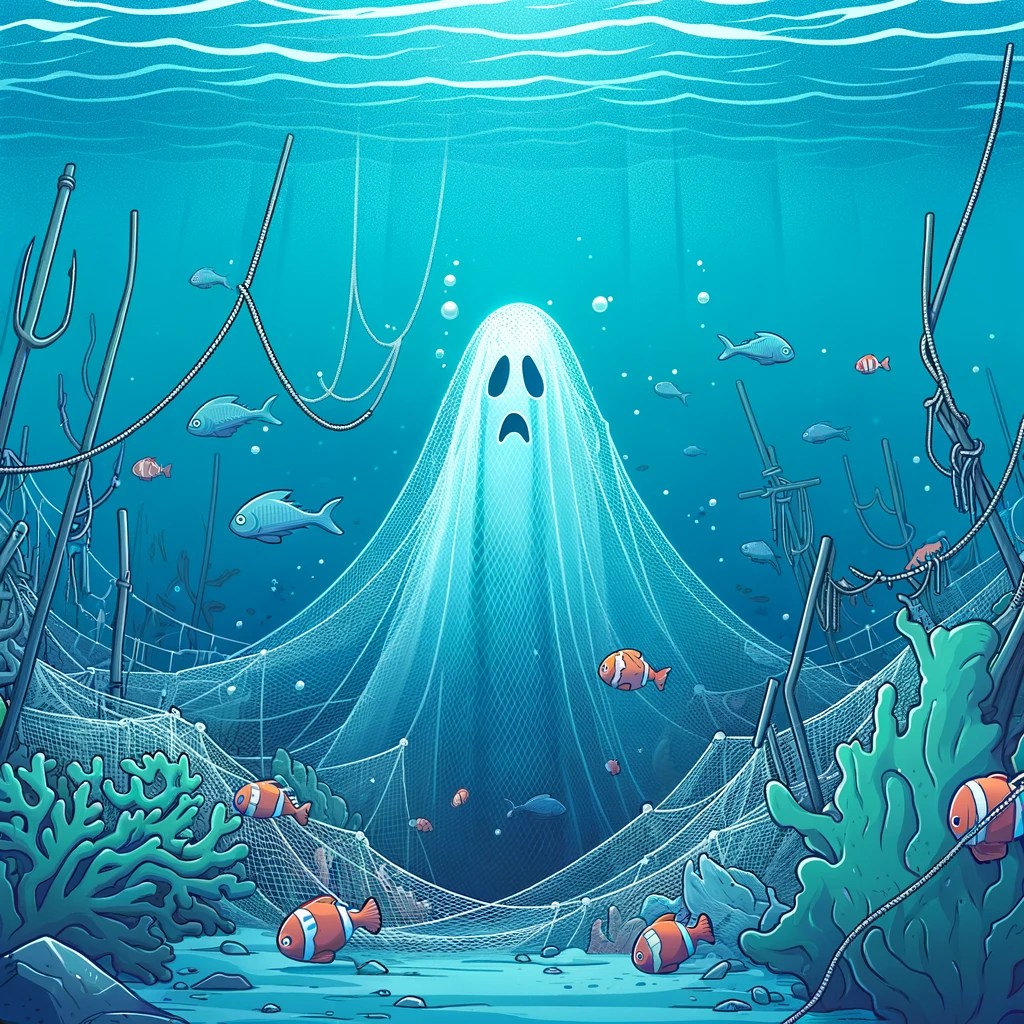
Beneath the ocean’s surface lies a silent predator – ghost fishing gear. Lost or abandoned fishing nets, lines, and traps, often termed ‘ghost gear’, continue to fish indiscriminately, long after their intended use. This unseen menace is one of the most significant threats to marine life today.
Ghost gear traps, injures, and kills millions of marine animals annually, including fish, sea turtles, birds, and marine mammals. These materials, mostly made of durable plastics, can persist in the ocean for years, continuing their deadly toll. The problem compounds as entangled animals attract predators, which can become ensnared themselves, creating a deadly cycle of destruction.
Beyond the immediate harm to wildlife, ghost gear also impacts the health of marine ecosystems. It damages coral reefs, smothers habitats, and contributes to the growing problem of marine debris and plastic pollution.
The issue of ghost gear is a stark reminder of the long-lasting impact of human activities on the ocean. Mitigating this problem requires a multi-faceted approach. Fishers can adopt more sustainable practices and use gear with tracking devices or biodegradable materials. Governments and organizations can facilitate better reporting and retrieval systems for lost gear, and implement stricter regulations and penalties.
As consumers, we can play a role by supporting sustainable seafood and demanding transparency in fishing practices. It is crucial to raise awareness about this hidden threat and work towards solutions that protect our ocean’s health and the creatures that call it home.
The ghost gear problem is a call to action. We must work collaboratively to remove these deadly traps from our oceans and prevent their loss in the first place, ensuring the ocean remains a vibrant and safe haven for all its inhabitants.
 Saltwater Stoke
Leave a comment