
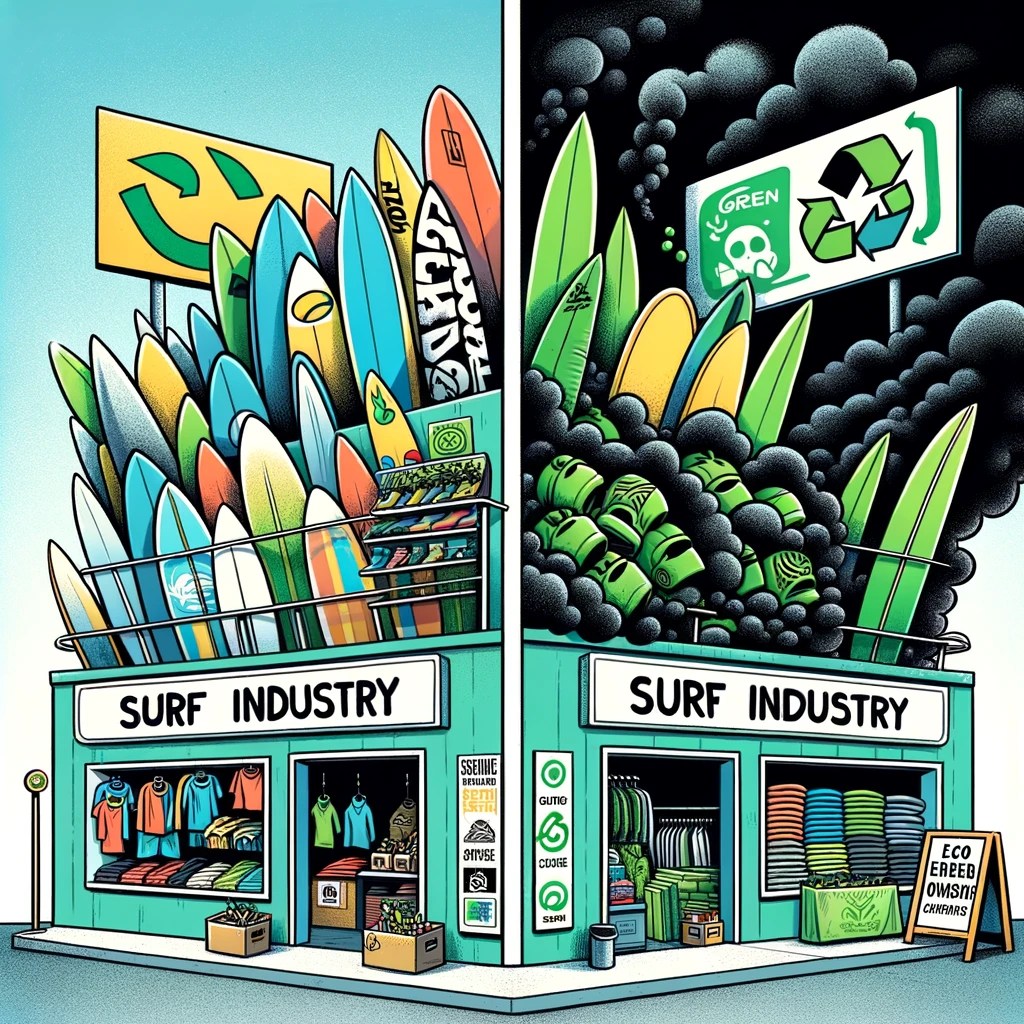
As someone who lives for the surf, my connection to the ocean is more than a hobby; it’s a bond with nature. But lately, a troubling contradiction within the surf industry has been gnawing at me. While the industry projects a ‘green’ image, its environmental footprint tells a different story.
Surf brands are increasingly marketing themselves as eco-friendly. They sponsor beach clean-ups, launch sustainable product lines, and advocate for ocean conservation. This is a positive trend, but it doesn’t fully align with the reality of their manufacturing practices.
Modern surfboards are primarily made from closed-cell foam and epoxy resins. While epoxy is less toxic than polyester resin, it’s not without environmental impact. The foam cores, often derived from petrochemicals, present their own set of ecological concerns. Moreover, the lifecycle of a surfboard, from production to disposal, is rarely environmentally friendly.
Wetsuits, predominantly made from neoprene, a petroleum-based material, continue to pose sustainability challenges. The apparel side of the industry also struggles with issues like water consumption, chemical dyes, and textile waste.
The dissonance between the surf industry’s environmental messaging and the ecological cost of its products is striking. As surfers, we’re drawn to the sport for its harmony with nature, yet our equipment choices may inadvertently harm the very environment we love.
My own carbon footprint in relation to surfing is a stark example of hypocrisy. There was a time when I thoughtlessly jumped in my car, driving three or four hours on the whisper of a rumor, chasing the promise of a ‘secret’ spot with perfect waves.
In my surfing journey, I’ve commissioned numerous boards and shaped many myself, seldom pausing to consider the environmental impact. The materials used, the waste generated by shapers, and the long-term effects on both the environment and the health of those exposed to these substances rarely crossed my mind.
I’m equally culpable for the many times I flew to distant shores, more concerned about the airline’s handling of my surfboard than the significant carbon footprint left by my travels. The irony of seeking pristine waves while contributing to environmental degradation was lost on me then.
What’s the solution? The industry needs to embrace true sustainability. This means investing in research and development for eco-friendlier materials and manufacturing methods. Innovations such as bio-based resins, recycled foam, and sustainable alternatives to neoprene should become standard practices, not just niche offerings.
As a community, surfers can play a crucial role. We can support brands genuinely dedicated to sustainability, educate ourselves about the products we use, and demand greater transparency from manufacturers. Our passion for the waves should extend to a commitment to protect the ocean.
The surf industry, with its unique relationship to the oceans, must align its practices with its environmental ethos. As surfers, we have the power and responsibility to steer this change, ensuring that our love for surfing doesn’t come at the ocean’s expense.
 Saltwater Stoke
Leave a comment