
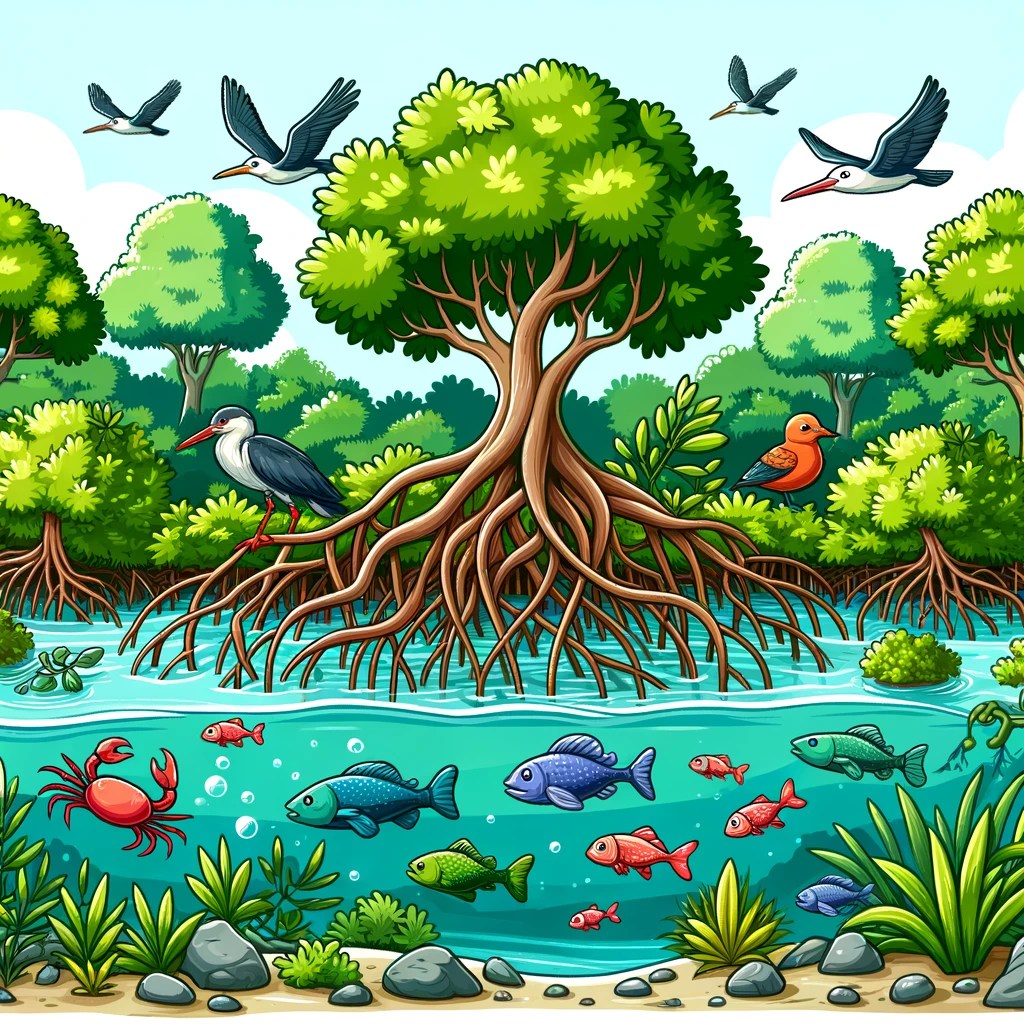
Mangroves, often overlooked, are among the most productive and biologically diverse ecosystems on our planet. These unique coastal forests, recognized by their dense tangle of prop roots that make the trees appear to be standing on stilts above the water, are crucial for both environmental health and human well-being.
Mangroves provide a range of invaluable ecosystem services. They act as natural coastal defenses, absorbing the energy of storm surges and reducing the impact of hurricanes and tsunamis. Their complex root systems help stabilize shorelines, preventing erosion and sedimentation. These ecosystems are also incredible carbon sinks, sequestering carbon at a rate several times greater than tropical rainforests.
The ecological importance of mangroves extends to the support of biodiversity. They serve as nurseries for a variety of fish species, essential for both commercial and subsistence fishing. They are habitats for a diverse array of wildlife, including birds, crabs, and even juvenile sharks. The health of many marine species and fisheries directly depends on the well-being of mangrove forests.
Despite their importance, mangroves are disappearing at an alarming rate due to coastal development, aquaculture, and climate change. The loss of these ecosystems not only impacts the wildlife that relies on them but also increases the vulnerability of coastal communities to climate impacts.
Conserving and restoring mangrove forests is crucial. This involves implementing protective legislation, sustainable management practices, and community engagement. Restoration efforts are also essential in areas where mangroves have been lost.
As individuals, we can contribute by raising awareness about the importance of mangroves, supporting conservation efforts, and advocating for policies that protect these vital ecosystems.
Mangroves are more than just coastal forests; they are a critical line of defense against climate change and a key to preserving marine biodiversity. Protecting them is not just an environmental imperative; it’s a necessity for our own survival.
 Saltwater Stoke
Leave a comment